Tutorial
Construction
Timber Framing 101: Building with BC Wood
A comprehensive guide to timber frame construction using locally sourced British Columbia lumber.
David Thompson
Sept 5, 2024
12 min read
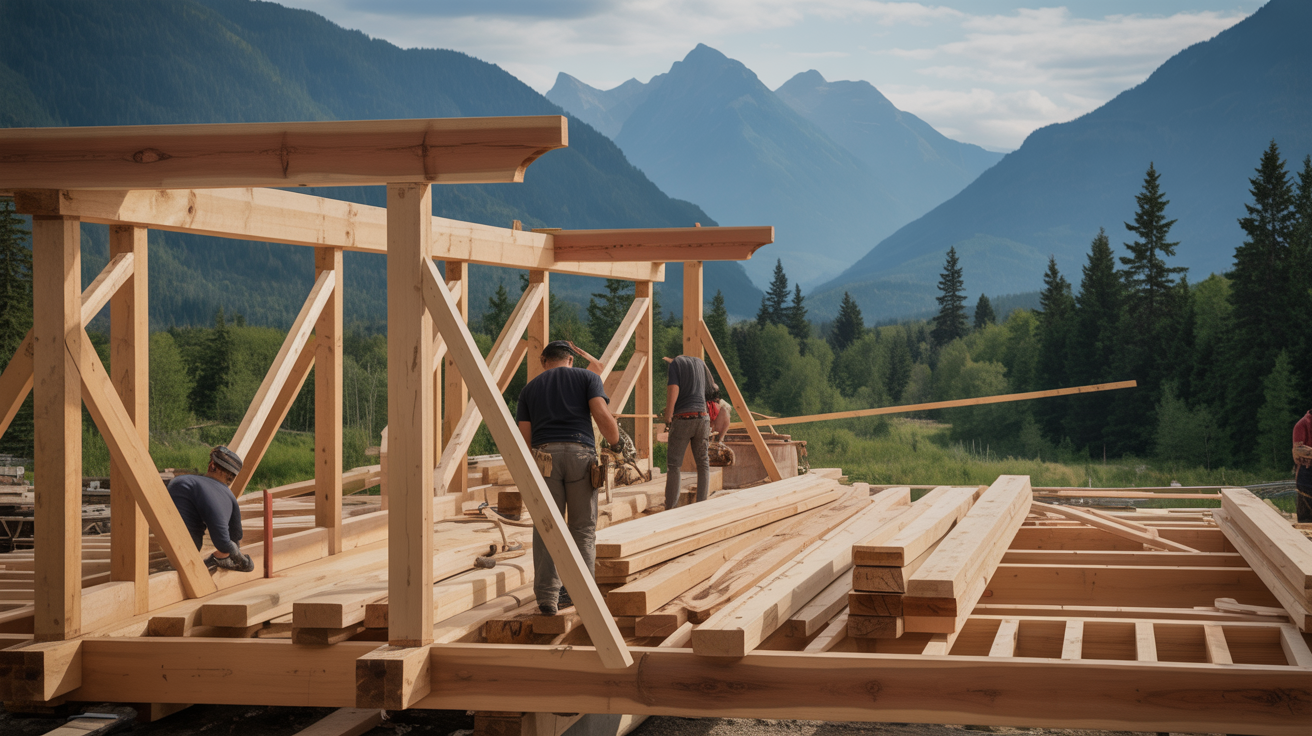
Timber framing is an ancient building technique that uses locally sourced wood to create durable, beautiful structures. In British Columbia, with abundant forest resources and a strong woodworking tradition, timber framing offers an excellent way to build sustainable, energy-efficient homes using local materials.
## Understanding Timber Framing
Unlike conventional stick framing, timber framing uses large wooden posts and beams joined together with traditional woodworking joints, secured with wooden pegs rather than metal fasteners.
### Key Characteristics:
- **Heavy timber construction**: Posts and beams typically 8" x 8" or larger
- **Traditional joinery**: Mortise and tenon, dovetail, and scarf joints
- **Wooden pegs**: Oak or hardwood dowels secure joints
- **Exposed structure**: The frame becomes an architectural feature
## BC Wood Species for Timber Framing
### Primary Structural Woods:
- **Douglas Fir**: Excellent strength-to-weight ratio, abundant in BC
- **Western Red Cedar**: Naturally rot-resistant, good for sills and outdoor elements
- **Sitka Spruce**: High strength, commonly used for beams
- **Western Hemlock**: Good structural properties, readily available
### Hardwoods for Joinery:
- **Pacific Yew**: Extremely hard, excellent for pegs
- **Bigleaf Maple**: Good for pins and wedges
- **Garry Oak**: When available, excellent for pegs
## Basic Timber Frame Structure
### Foundation to Plate:
1. **Stone or Concrete Foundation**: Raises timber off ground moisture
2. **Sill Plates**: First timber course, often cedar for rot resistance
3. **Posts**: Vertical support members
4. **Girts and Plates**: Horizontal connecting members
5. **Braces**: Diagonal members for stability
### Roof Structure:
- **Tie Beams**: Span between posts, resist outward thrust
- **Principal Rafters**: Main roof support members
- **Common Rafters**: Secondary roof framing
- **Ridge Beam**: Top of roof structure
## Essential Joinery Techniques
### Mortise and Tenon:
The foundation joint of timber framing:
- **Mortise**: Square hole cut into receiving timber
- **Tenon**: Corresponding projection on joining timber
- **Variations**: Through tenon, blind tenon, wedged tenon
### Dovetail Joints:
Prevent withdrawal under load:
- **Sill to Post**: Keeps post from sliding off sill
- **Girt to Post**: Locks horizontal members in place
### Scarf Joints:
Join timbers end-to-end:
- **Bladed Scarf**: Simple overlap joint
- **Tabled Scarf**: More complex, stronger joint
## Tools for Timber Framing
### Hand Tools:
- **Framing chisels**: 1", 1.5", 2" for different sized joints
- **Wooden mallet**: For driving chisels without damage
- **Hand saws**: For cutting tenons and general work
- **Framing square**: For layout and checking angles
- **Marking gauge**: For scribing joint lines
### Power Tools:
- **Circular saw**: For rough cutting
- **Chain saw**: For initial timber processing
- **Power planer**: For smoothing surfaces
- **Chain mortiser**: For cutting mortises quickly
## Timber Processing and Preparation
### Selecting Trees:
- Winter cutting for lower moisture content
- Straight grain, minimal defects
- Proper species for intended use
- Sustainable harvesting practices
### Drying and Seasoning:
- **Air drying**: Stack with stickers, 1 year per inch of thickness
- **Kiln drying**: Faster but more expensive
- **Green timber framing**: Working with unseasoned wood
- **Target moisture content**: 15-19% for structural timbers
## Layout and Design
### Traditional Planning:
- **Story pole**: Full-scale layout stick
- **Floor plans**: Drawn to scale
- **Elevation drawings**: Show joint locations
- **Timber list**: Specifies each piece needed
### Modern CAD Systems:
- Computer-aided design for complex projects
- 3D visualization capabilities
- Automated cutting lists
- CNC machine compatibility
## The Raising Process
### Preparation:
- All joinery cut and fitted
- Timbers organized by bent (cross-sectional frame)
- Community gathering of helpers
- Food and celebration planned
### Raising Day:
1. **Sill installation**: Level and square foundation course
2. **Bent assembly**: Assemble frames on deck
3. **Bent raising**: Lift frames into position
4. **Plate installation**: Connect bents with long horizontal members
5. **Bracing**: Install temporary and permanent braces
## Infill and Finishing
### Wall Systems:
- **Straw bale**: Excellent insulation, renewable
- **Cordwood masonry**: Uses short logs and mortar
- **Cob**: Clay, sand, and straw mixture
- **Conventional insulation**: Fiberglass or foam between studs
### Exterior Finishing:
- **Board and batten siding**: Traditional BC appearance
- **Cedar shingles**: Weather-resistant and attractive
- **Plaster over lath**: Historical authentic finish
- **Modern siding materials**: For weather protection
## Advantages of Timber Framing
### Environmental Benefits:
- Uses renewable, local materials
- Carbon sequestration in structure
- Minimal processing compared to steel/concrete
- Long lifespan reduces replacement needs
### Performance Benefits:
- Excellent seismic performance due to flexibility
- Superior fire resistance of large timbers
- Natural beauty of exposed structure
- Adaptable for future modifications
## Considerations and Challenges
### Cost Factors:
- Higher upfront material costs
- Skilled labor requirements
- Specialized tools needed
- Longer construction timeline
### Technical Challenges:
- Requires understanding of traditional joinery
- Weather-dependent outdoor work
- Heavy lifting and equipment needs
- Building code compliance in some areas
## Getting Started
### Learning Options:
- Timber framing workshops and schools
- Apprenticeships with experienced framers
- Books and online resources
- Guild memberships for networking
### First Projects:
- Simple shed or workshop
- Timber frame additions to existing buildings
- Gazebos or outdoor structures
- Chicken coops or garden structures
Timber framing connects us to centuries of building tradition while creating structures that can last for generations. In BC, with our abundant forest resources and growing interest in sustainable building, timber framing offers an excellent path toward more environmentally conscious construction.
About David Thompson
David Thompson is a contributor to BC Sustainable Collective, sharing practical knowledge and experiences from the sustainable living community in British Columbia.
View all articles by David Thompson →