Guide
Energy
Off-Grid Solar Systems for Remote BC Properties
Planning and installing solar power systems for off-grid homes and cabins across British Columbia.
Lisa Park
Sept 3, 2024
10 min read
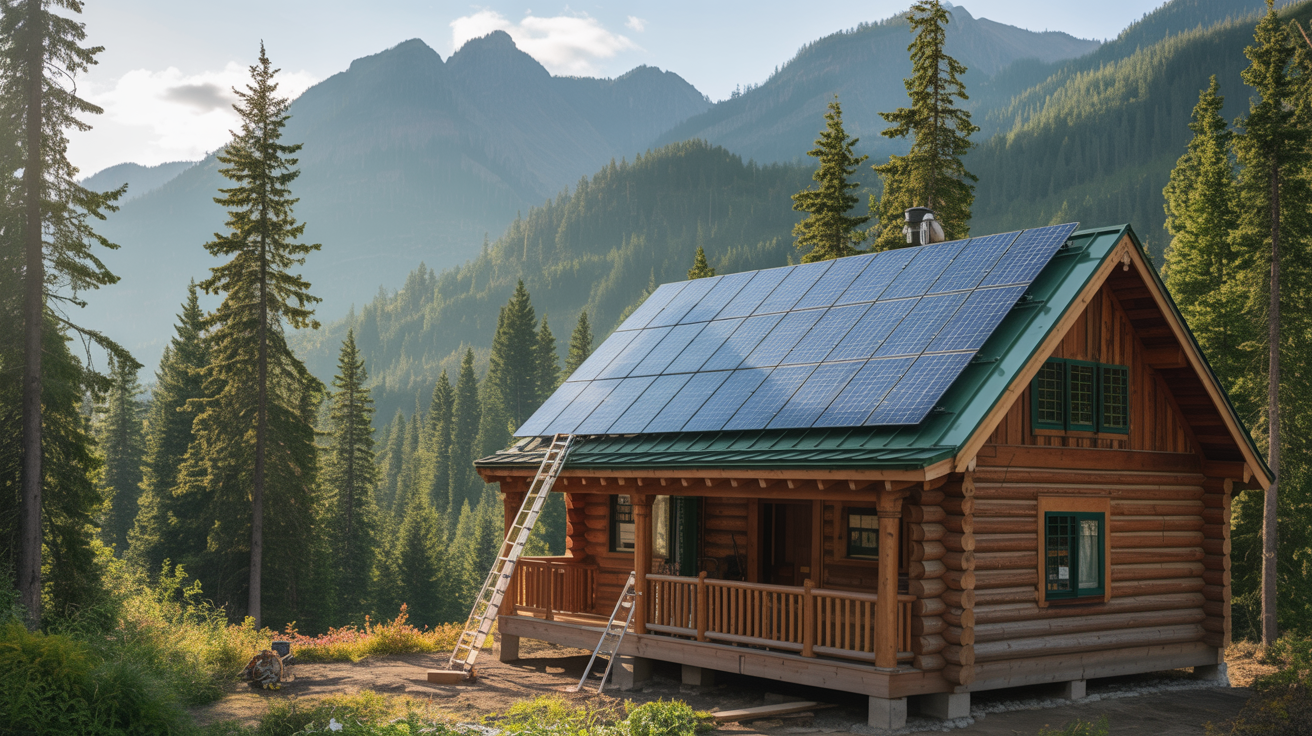
Installing solar power systems for off-grid homes and cabins requires careful planning and understanding of BC's climate conditions. This comprehensive guide covers everything you need to know about designing, installing, and maintaining solar power systems for remote properties.
## System Components Overview
### Solar Panels:
- **Monocrystalline**: Highest efficiency, best for limited space
- **Polycrystalline**: Good value, slightly lower efficiency
- **Thin film**: Flexible options, lower efficiency but cheaper
### Charge Controllers:
- **PWM Controllers**: Simple, less expensive, lower efficiency
- **MPPT Controllers**: More efficient, especially in cold weather
### Batteries:
- **Lead Acid**: Proven technology, lower upfront cost
- **AGM**: Maintenance-free, good cold weather performance
- **Lithium**: Highest efficiency, longest life, higher cost
### Inverters:
- **Pure Sine Wave**: Best for sensitive electronics
- **Modified Sine Wave**: Lower cost, adequate for most uses
## BC Climate Considerations
### Seasonal Variations:
- Summer: 16+ hours of daylight, peak production
- Winter: 8 hours of daylight, low sun angle
- Spring/Fall: Moderate production, variable weather
### Weather Challenges:
- Snow load on panels requires proper mounting
- Frequent overcast days need larger battery bank
- Temperature swings affect battery performance
- Wind and ice storms require sturdy installation
## System Sizing Calculations
### Energy Audit:
1. List all electrical devices and their power consumption
2. Estimate daily usage hours for each device
3. Calculate daily energy needs in watt-hours
4. Add 20-30% safety margin
### Example Load Calculation:
- LED lights: 10W × 6 hours × 5 lights = 300Wh
- Refrigerator: 150W × 8 hours = 1,200Wh
- Water pump: 500W × 1 hour = 500Wh
- Electronics: 100W × 4 hours = 400Wh
- **Total daily load**: 2,400Wh + 20% = 2,880Wh
### Solar Array Sizing:
- BC interior average: 3.5 peak sun hours (winter)
- Required array: 2,880Wh ÷ 3.5h ÷ 0.8 efficiency = 1,029W
- **Recommended**: 1,200W array for safety margin
### Battery Bank Sizing:
- Days of autonomy desired: 3-5 days typical
- Depth of discharge: 50% for lead acid, 80% for lithium
- Example: 2,880Wh × 4 days ÷ 0.5 DOD = 23,040Wh
- **At 24V system**: 23,040Wh ÷ 24V = 960Ah battery bank
## Installation Considerations
### Site Assessment:
- Solar exposure analysis (south-facing preferred)
- Shading from trees, buildings, mountains
- Ground-mount vs. roof-mount options
- Distance from panels to batteries/inverter
### Mounting Systems:
- **Fixed mounts**: Simple, reliable, lower cost
- **Tracking mounts**: Higher production, more complexity
- **Snow considerations**: Steep angle helps shed snow
- **Wind loads**: Important in exposed locations
### Electrical Installation:
- DC disconnect switches required
- Proper grounding and surge protection
- Battery ventilation for lead acid batteries
- Code compliance and permits
## Maintenance Requirements
### Regular Tasks:
- Visual inspection of panels and wiring
- Battery voltage and specific gravity checks
- Clean panels as needed (rain usually sufficient)
- Check connections for corrosion
### Seasonal Maintenance:
- Snow removal from panels when safe
- Battery equalization charges (lead acid)
- Generator testing and maintenance
- System performance review
### Annual Tasks:
- Deep clean of panels if needed
- Replace damaged components
- Update load analysis
- Professional system inspection
## Common Design Mistakes
### Undersizing:
- Battery bank too small for autonomy needs
- Array too small for winter production
- Inverter too small for peak loads
### Poor Planning:
- Inadequate wire sizing causes voltage drop
- Insufficient ventilation for batteries
- No provisions for future expansion
- Ignoring code requirements
## Cost Considerations
### Initial System Costs (typical 3kW system):
- Solar panels: $2,000-3,000
- Batteries: $3,000-8,000 (varies by type)
- Charge controller: $300-800
- Inverter: $500-1,500
- Installation materials: $1,000-2,000
- **Total**: $6,800-15,300
### Long-term Costs:
- Battery replacement every 5-15 years
- Inverter replacement every 10-15 years
- Annual maintenance: $200-500
- Generator fuel for backup power
## Backup Power Integration
### Generator Sizing:
- Size for largest simultaneous loads
- Battery charging capacity
- Fuel type considerations (propane, diesel, gas)
### Automatic Start Systems:
- Start generator when batteries reach set voltage
- Stop when batteries are recharged
- Weather protection and remote monitoring
## Monitoring and Optimization
### System Monitoring:
- Battery voltage and current
- Solar production tracking
- Load consumption analysis
- System efficiency metrics
### Optimization Strategies:
- Load shifting to peak production hours
- Seasonal angle adjustment
- Battery bank temperature compensation
- Energy-efficient appliances
## Professional vs. DIY Installation
### DIY Considerations:
- Electrical knowledge required
- Local code compliance
- Safety risks with high voltage DC
- Equipment warranty implications
### Professional Installation:
- Proper code compliance
- System design optimization
- Safety and liability coverage
- Ongoing support and maintenance
Off-grid solar systems provide energy independence and environmental benefits, but require careful planning and proper installation. Start with a thorough energy audit, size components conservatively, and don't hesitate to consult with professionals for complex installations.
About Lisa Park
Lisa Park is a contributor to BC Sustainable Collective, sharing practical knowledge and experiences from the sustainable living community in British Columbia.
View all articles by Lisa Park →